An ongoing series applying Disciplined Execution Architecture to how execution actually breaks down — and how leaders intervene structurally rather than reactively. The current run below reflects the active series; the archive continues to grow.
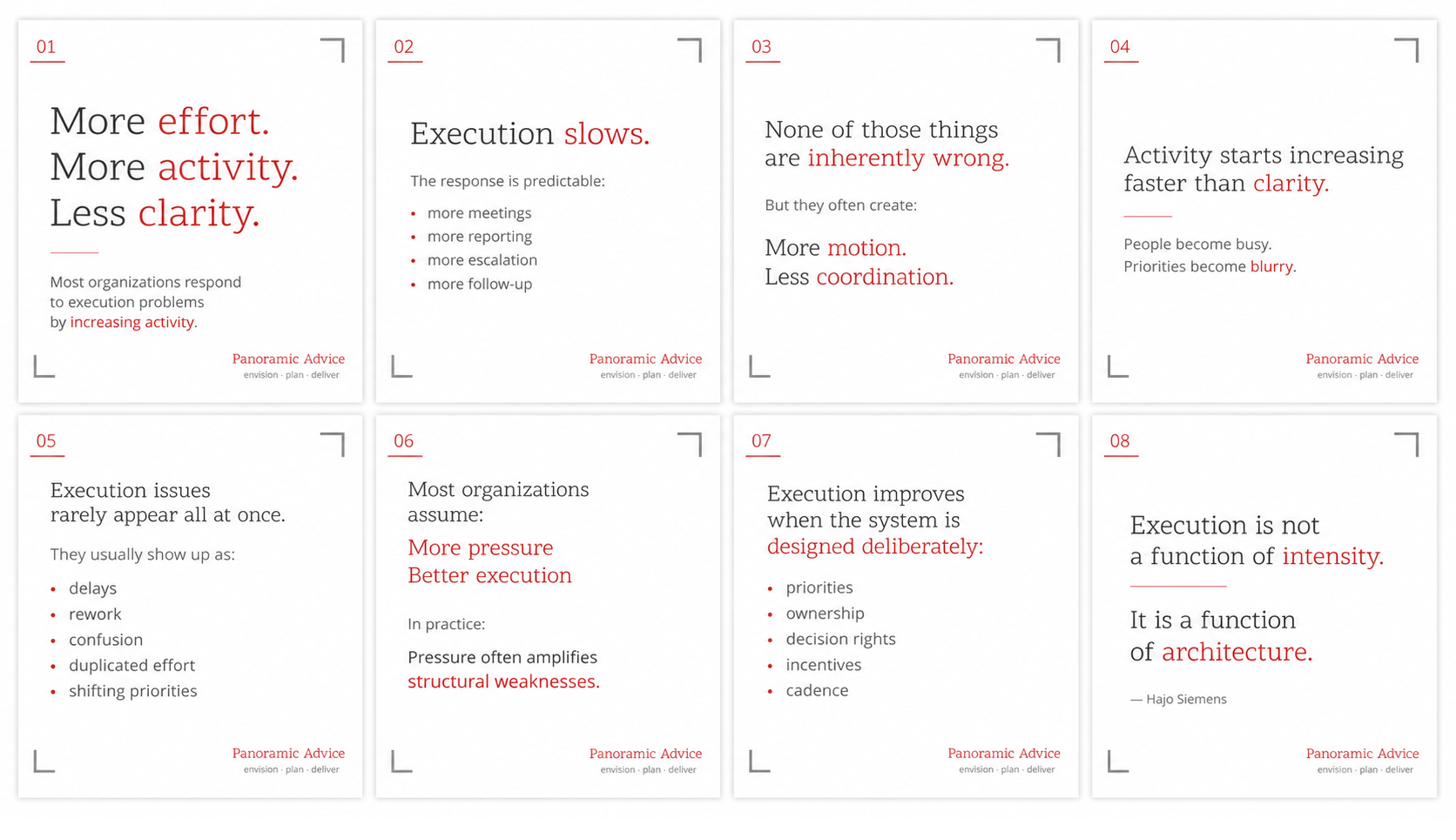
Execution struggles are rarely due to lack of effort. They are due to lack of design. Execution is not a function of intensity — it is a function of architecture.
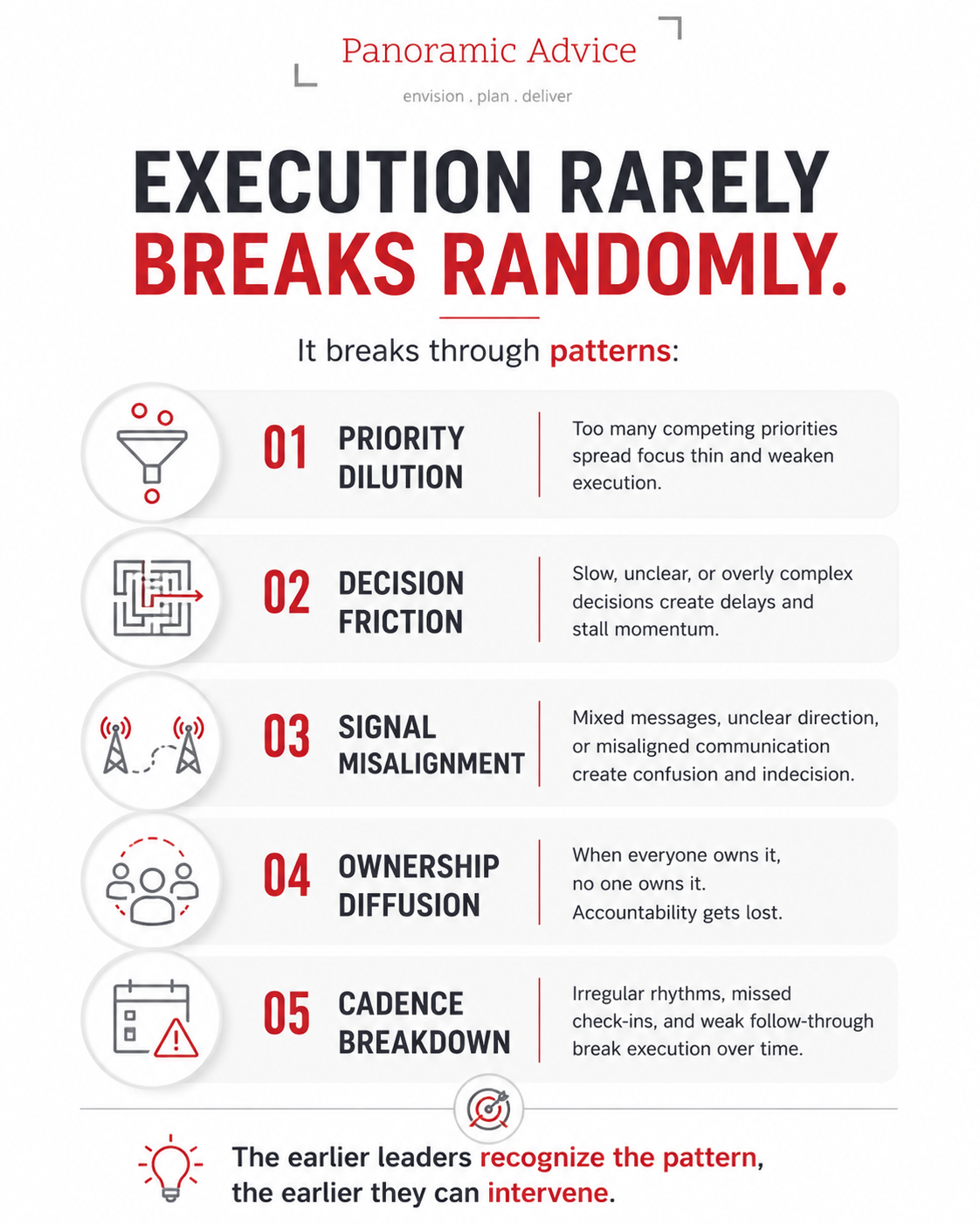
Execution problems feel complex, but they are structurally predictable: priority dilution, decision friction, signal misalignment, ownership diffusion, cadence breakdown.
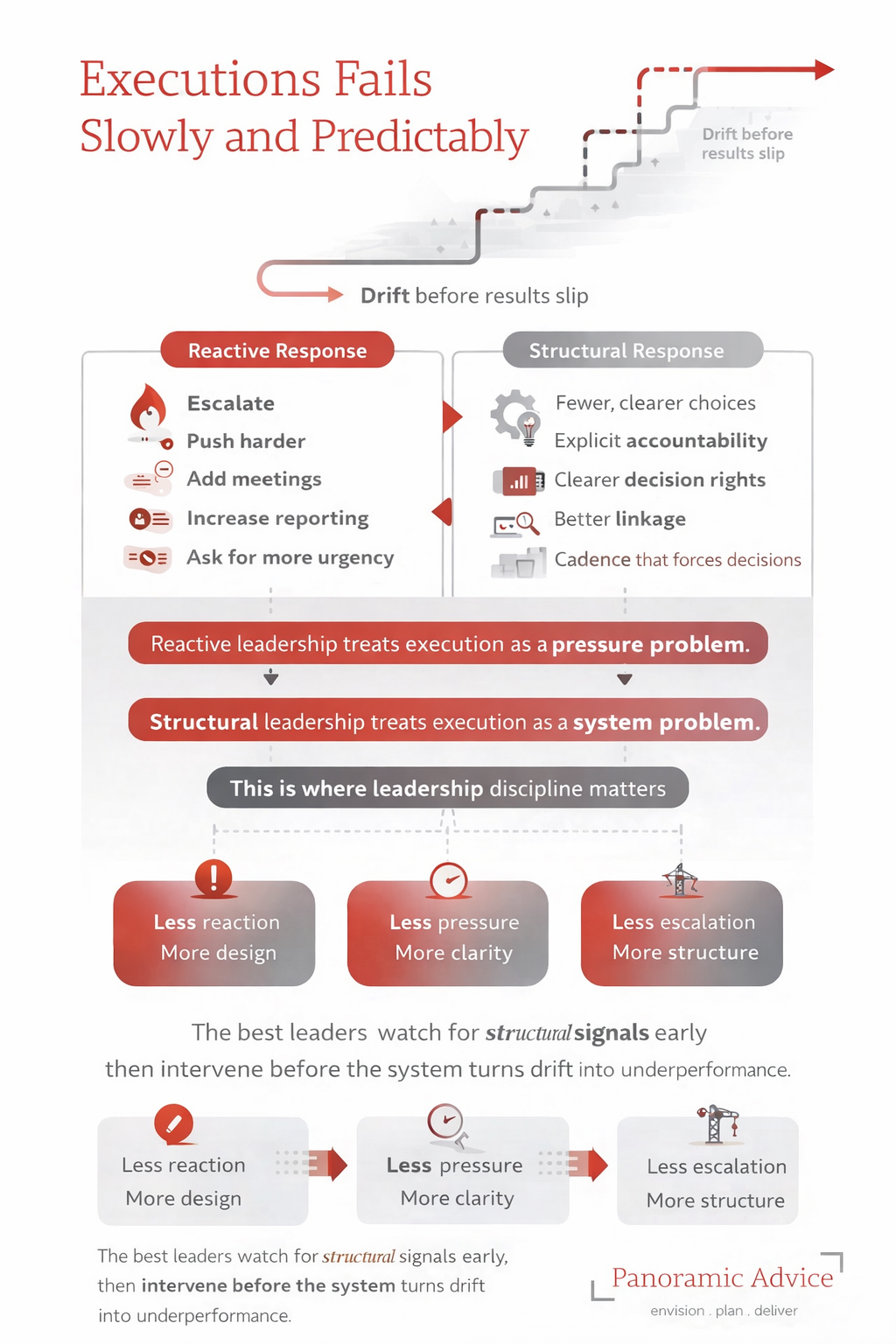
Execution rarely fails suddenly — it drifts. Structural leadership simplifies priorities, clarifies ownership, aligns incentives, and tightens cadence.
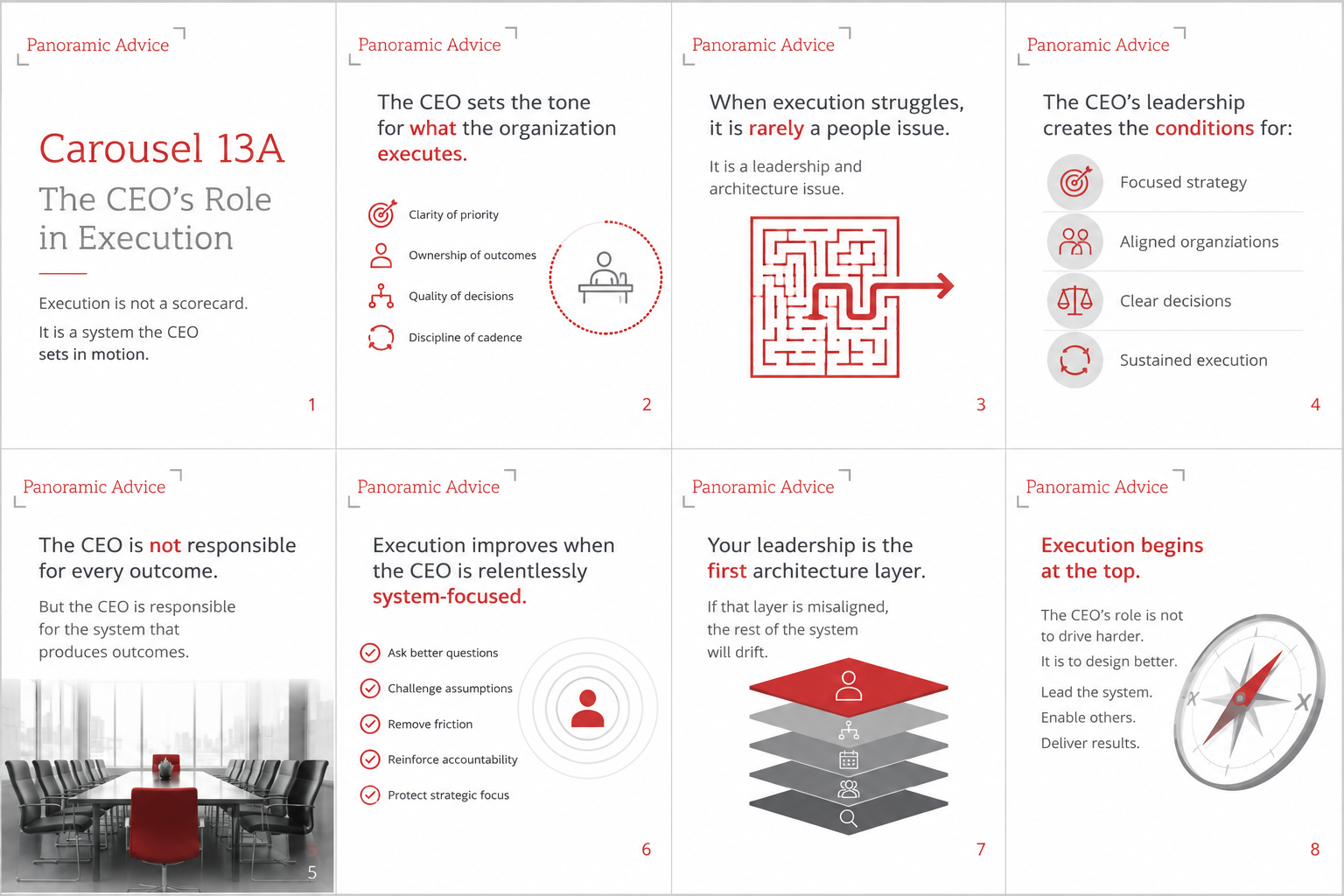
Execution is not a delegation problem — it is a leadership design problem. Execution quality reflects the CEO's choices on priorities, capital, cadence, and accountability.
Cadence is not a calendar of meetings. It is the mechanism that repeatedly compares strategic intent with operating reality and adjusts the system.
Not all initiatives are equal. An initiative can hit every milestone and still fail to create the value that justified the investment.
Transformation is not a project. It is the outcome of disciplined execution sustained until the new operating model produces measurable value.
The full archive, including Articles 1–9, is published on LinkedIn.
Follow on LinkedIn ↗